
Choosing the right bar bending machine is an important decision for construction companies, infrastructure contractors, and steel reinforcement fabrication units.
The right machine helps improve bending accuracy, maintain consistent bar shapes, reduce manual effort, and support faster construction work.
However, not every bending machine is suitable for every project. The ideal choice depends on the type of rebar you use, steel bar diameter, bending angles, daily production requirements, available power supply, and budget.
In this guide, we explain how to choose a bar bending machine, the key factors to consider before buying, and how to select equipment that matches your construction requirements.
What Is a Bar Bending Machine?
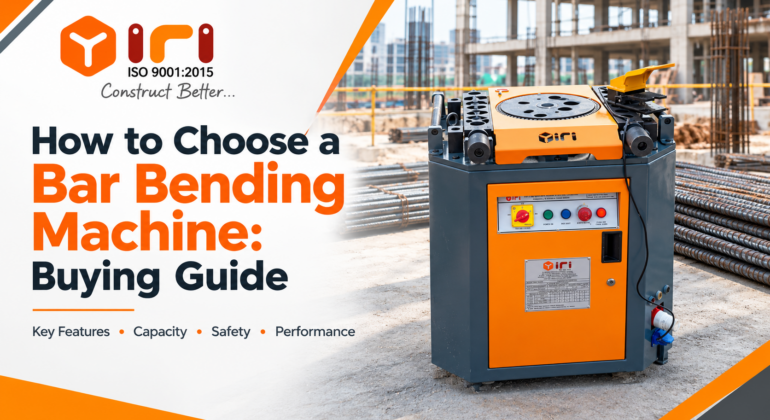
A bar bending machine is construction equipment used to bend steel reinforcement bars, commonly known as rebar, into specific angles and shapes.
These bars are used in reinforced concrete structures such as columns, beams, slabs, foundations, and other structural elements.
Compared with manual bending methods, a suitable rebar bending machine can help improve consistency, reduce physical effort, and increase productivity on construction sites and in fabrication workshops.
Depending on the machine design, operators can bend steel bars to the angles required by construction drawings and reinforcement schedules.
How to Choose the Right Bar Bending Machine
Before purchasing a machine, evaluate your actual work requirements rather than selecting equipment based only on price. The following factors can help you make an informed decision.
1. Check the Steel Bar Diameter and Bending Capacity
The first step is to identify the diameter of the steel bars you regularly bend. Different bending machines are designed to handle different bar sizes and operating conditions.
Consider the following questions:
- What is the minimum and maximum rebar diameter used in your projects?
- Do you regularly bend smaller bars, larger bars, or both?
- What grade of steel do you use?
- Does the machine manufacturer specify the capacity for your particular steel grade?
A machine that is too small for your requirements may struggle to bend bars correctly or may experience excessive wear. Choosing an appropriately rated machine helps support reliable operation.
Buying tip: Always verify the manufacturer’s rated bending capacity for the required bar diameter and steel grade. Do not rely on a general capacity claim without checking the applicable specifications.
2. Understand the Types of Bar Bending Machines
Understanding the available types of bending machines will help you identify the right equipment for your application.
Manual bar bending equipment: Manual options may suit limited, occasional bending work, depending on the bar size and tool design.
They generally require more operator effort and may not be practical for high-volume work.
Electric bar bending machines: These machines use an electric motor to drive the bending mechanism.
They can be suitable for construction sites and fabrication operations that require regular bending, provided their rated capacity matches the job.
Automatic or CNC bending machines: Programmable bending equipment can support repeatable production for suitable applications.
These machines may be useful for operations that require higher production volumes, complex bending sequences, or integration with a more automated workflow.
When comparing bending machines, consider not only the type but also the machine’s capacity, control system, operating requirements, and maintenance needs.
3. Evaluate Bending Angle Accuracy
Accurate bending is essential when preparing reinforcement bars according to structural drawings and bar bending schedules.
The machine should be able to produce the required bends consistently for your intended applications. Ask the supplier about angle adjustment, repeatability, operating controls, and the procedure for checking the finished bend.
Before finalizing your purchase, confirm that the machine can handle your common bending angles and bar shapes. If your projects require frequent repetition of the same bends, ease of setting and repeating the angle can be especially important.
Operators should also follow the approved reinforcement drawings and applicable construction standards rather than changing bend dimensions based on convenience.
4. Match the Machine to Your Daily Production Volume
Your daily workload plays a major role in machine selection.
A contractor handling occasional residential construction may have different requirements from a large infrastructure project or a steel reinforcement fabrication unit processing substantial quantities of rebar.
Consider:
- The approximate number of bars bent per shift
- The number of operating hours per day
- The number of different bar sizes handled
- The need to repeat the same bending operation
- The number of operators available
A higher-capacity or more automated machine may be worth evaluating for continuous, high-volume work. For smaller projects, a simpler machine with suitable capacity may be sufficient.
The objective is to select equipment that meets your production requirements without paying for features or capacity you do not need.
5. Check Motor Power and Electrical Requirements
For an electric bar bending machine, check the motor rating and electrical supply requirements before ordering.
Ask the manufacturer to confirm:
- Required voltage and phase
- Motor power rating
- Starting and operating requirements
- Compatibility with the power supply available at your site
- Any recommended electrical protection
Construction sites may have different electrical conditions from permanent fabrication workshops. Confirming compatibility in advance can help prevent installation delays and operating problems.
Never assume that two machines with similar bending capacities have identical electrical requirements.
6. Consider Machine Build Quality and Durability
Construction equipment often operates in demanding environments. A machine’s construction quality can affect its reliability, maintenance requirements, and working life.
When assessing a bar bending machine, inspect or ask about:
- Frame construction and overall stability
- Quality of the bending plate, rollers, pins, and other working components
- Protection of electrical components
- Ease of accessing parts that require maintenance
- Suitability for your working environment
Where possible, request product photographs, technical documentation, a demonstration, or a visit to see the machine operating.
Build quality should be evaluated alongside capacity and service support—not simply by the machine’s external appearance.
7. Review Safety Features and Operating Procedures
Safety should be a priority when selecting any rebar bending machine. Moving components, rotating bending plates, and steel bars can create pinch points and other hazards.
Before purchasing, ask the supplier about the available safety features, emergency-stop arrangements where applicable, guarding, and the recommended operating procedure.
Also check whether the supplier provides operating instructions and guidance for safe use.
Operators should receive suitable training, keep hands and clothing away from moving parts, secure the work area, and follow the manufacturer’s instructions. The machine must be used within its rated capacity and in accordance with applicable workplace safety requirements.
8. Compare Maintenance, Spare Parts, and After-Sales Support
A machine’s purchase price is only one part of its overall cost. Maintenance, spare parts, downtime, and service availability can also affect operating expenses.
Before placing an order, ask the manufacturer or supplier:
- Are commonly required spare parts available?
- What routine maintenance is recommended?
- Is technical support available if the machine develops a problem?
- Are installation guidance and operator instructions provided?
- What warranty terms and exclusions apply?
For construction companies, reliable support can be especially valuable when equipment is needed to keep a project on schedule.
Choose a supplier that can clearly explain the machine’s operating requirements and the support available after delivery.
9. Calculate the Total Cost of Ownership
The lowest-priced bending machine is not necessarily the most economical choice over time.
Compare the overall cost of each option, including:
- Initial purchase price
- Transportation and installation, where applicable
- Electricity consumption
- Routine servicing and replacement parts
- Expected downtime
- Warranty coverage and available technical support
A machine that fits your workload, performs consistently, and is supported by an accessible service network may provide better long-term value than a cheaper machine that does not meet your requirements.
Request a detailed quotation and compare equivalent specifications before making your final selection.
Bar Bending Machine Selection Checklist
Use this checklist to compare different bending machines before buying.
| Selection factor | What to verify |
|---|---|
| Bar diameter | Suitable for the steel bar sizes used in your projects |
| Steel grade | Rated capacity confirmed for the required material |
| Bending angles | Suitable for the bends specified in your drawings |
| Production volume | Matches your daily and shift-wise workload |
| Machine type | Manual, electric, or automated according to your needs |
| Power supply | Compatible with the available electrical connection |
| Build quality | Appropriate frame and working components |
| Safety | Suitable safety features and clear operating instructions |
| Maintenance | Practical servicing requirements and spare-part availability |
| Warranty and support | Written warranty terms and after-sales service details |
| Total cost | Purchase and ongoing operating costs considered |
Common Mistakes to Avoid When Buying a Bar Bending Machine
Even a good machine may be unsuitable if it does not match the actual work. Avoid these common buying mistakes:
Choosing by price alone: Compare rated capacity, build quality, operating requirements, and service support as well as cost.
Ignoring steel grade: Bending capacity can vary with the material being processed. Confirm the manufacturer’s specifications for your application.
Buying more capacity than necessary: Oversized or highly automated equipment may add cost without providing a meaningful benefit for your workload.
Overlooking power requirements: Verify the electrical supply and installation needs before delivery.
Not checking after-sales service: Confirm how maintenance support and spare parts will be handled after purchase.
Ignoring operator training: Ensure that the team understands the correct operating procedure and safety requirements.
Why Choose a Suitable Bar Bending Machine from IRI Equipment?
For construction contractors and reinforcement work, selecting suitable machinery is an important part of improving day-to-day site operations.
IRI Equipment India Private Limited supplies construction and material-handling equipment, including steel bar bending and cutting machinery. When evaluating a machine for your project, discuss your required bar diameter, steel grade, bending requirements, production volume, and power supply with the supplier.
These details help you identify an appropriate model and understand its rated capabilities before making a purchase.
Before ordering, request the latest technical specifications, quotation, warranty information, and details of available service support.
Looking for a bar bending machine for your construction project?
Contact IRI Equipment to discuss your requirements and ask about the available bar bending machine options.
Frequently Asked Questions
1. How do I choose the right bar bending machine?
Start by checking the steel bar diameter and grade, required bending angles, daily production volume, available power supply, safety requirements, and budget. Then compare machines against the manufacturer’s rated specifications.
2. Which type of bar bending machine is best for construction work?
The best option depends on your workload. A suitable electric machine may work well for regular site operations, while programmable equipment may be useful for higher-volume or repetitive production. Always confirm the rated capacity and features for your application.
3. What capacity should I look for in a rebar bending machine?
Choose a machine rated for the largest bar diameter and relevant steel grade you expect to process. Confirm the exact capacity in the manufacturer’s technical documentation before purchasing.
4. Is an electric bar bending machine suitable for construction sites?
It can be suitable when its rated capacity, electrical requirements, portability or installation needs, and operating conditions match the site. Check the available power supply and the manufacturer’s recommendations.
5. What should I check before buying a bar bending machine?
Check capacity, bending accuracy, machine construction, motor and power requirements, safety features, maintenance needs, spare parts, warranty terms, and after-sales support.
6. How can I reduce the long-term cost of a bar bending machine?
Choose a machine that fits your actual workload, follow the recommended maintenance schedule, train operators, use the equipment within its rated capacity, and confirm spare-part and service availability.
7. Why is bending accuracy important in reinforcement work?
Accurate bends help reinforcement bars match the approved drawings and bar bending schedules. Consistent dimensions also help reduce rework and material waste. Reinforcement must always comply with the project’s structural design and applicable standards.
Conclusion
Choosing the right bar bending machine requires more than comparing prices or selecting the highest-capacity model.
The most important factors are rebar diameter, steel grade, bending accuracy, production volume, electrical requirements, safety, durability, and after-sales support.
By following this selection guide and checking the manufacturer’s specifications, you can make a more informed buying decision and choose bending equipment that suits your construction requirements.
If you are planning to purchase a bar bending machine, discuss your application with IRI Equipment and request specifications for the models that match your needs.